The Universe · S2 · E17
Gravity
Explore how science and humanity discovered, overcame and utilized gravity.

About this episode
Explore how science and humanity discovered, overcame and utilized gravity.
Season 2
1Alien Planets
45 minNov 27, 2007
Have planet hunters finally found proof of other Earthlike worlds? Astronomers have now discovered over two hundred alien worlds, beyond our solar system, that were unknown just a decade ago
2Cosmic Holes
45 minDec 4, 2007
We know black holes exist, and now scientists are trying to confirm that other holes lurk in hyperspace.
3Mysteries of the Moon
45 minDec 11, 2007
A closer look at the beacon in the dark sky reveals an ever-present source of myth, intrigue, controversy and unsolved mysteries
4The Milky Way
45 minDec 18, 2007
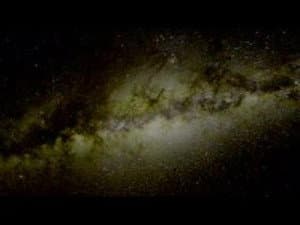
We used to think that Earth was at the center of the universe, but now we know we're not even at the center of our own galaxy. Countless wonders exist between where earth is situated and the massive black hole at the galactic center of our solar system. Within the Milky Way can be found the debris of old, dying stars fueling the birth of new stars and at the galactic center hypervelocity stars get catapulted clear beyond the Milky Way's outer rim at unimaginable speeds. Come along for a guided tour of 100,000 light-year-wide family of stars and stellar phenomena we call The Milky Way.
5Alien Moons
45 minJan 8, 2008
Travel from the inner solar system to the Kuiper Belt and explore the moons surrounding the planets of the solar system. Many of these moons that were once unknown are now on the cutting edge of astronomical study.
6Dark Matter
45 minJan 15, 2008
Scientists have no idea what it is, but Dark Matter and Dark Energy make up 96% of the Universe. Dark Matter is everywhere. It passes through everything we know on earth at billions of particles every second, yet no one has ever gotten a direct detection of this mysterious dark substance. An even more bewildering force is Dark Energy, which is rapidly pushing apart our Universe. Discovered only ten years ago, scientists are struggling to comprehend its unusual characteristics and answer the ultimate question; what is the fate of our Universe?
7Astrobiology
45 minJan 29, 2008
Does life exist on other planets? Astrobiology is a visionary new science that searches for life in space by combining the disciplines of astronomy, biology and geology. How did life evolve on Earth? What will life look like on other planets? These and other pertinent questions will be answered by a diverse group of scientists.
8Space Travel
45 minFeb 5, 2008
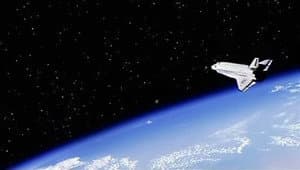
When man finally broke free of the Earth's gravitational pull the dream of traveling to other planets became a reality. Today scientists are proposing a bizarre array of technologies in the hope of traveling faster through space, from space craft sporting sails that catch laser beams, to propulsion engines powered by a bizarre entity known as anti-matter.
9Supernovas
45 minFeb 12, 2008
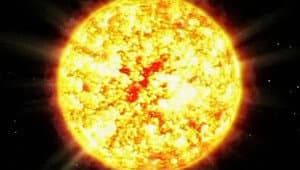
A stellar explosion, the supernova is the sensational death of a star. It can shine as bright as 100 billion suns and radiate as much energy as the Sun would emit over 10 billion years. Jets of high-energy light and matter are propelled into space and can cause massive gamma ray bursts and emit intense X-ray radiation for thousands of years. Astronomers believe that this process creates the very building blocks of planets, people and plants.
10Constellations
45 minFeb 19, 2008
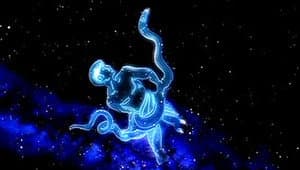
A constellation is a group of stars that are connected together to form a figure or picture. Explore some of the 88 official constellations and learn about some of the highlights of each.
11Unexplained Mysteries
45 minFeb 26, 2008
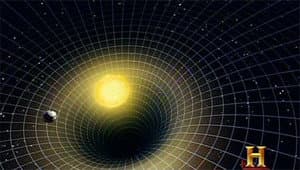
A look at myths and mysteries concerning the universe. Includes a possibility that life can be sustained on Mars, an examination of time travel, and the theory of a Dark Star as a companion of our sun. Also, a closer look at the Big Bang theory.
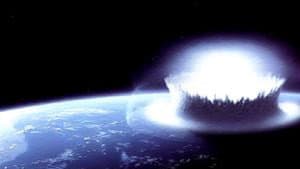
12Cosmic Collisions
45 minMar 4, 2008
Our universe is a cosmic shooting gallery, gravity is moving everything around & things will collide. Astronomers are attempting to understand how collisions occur in space.
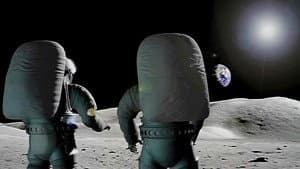
13Colonizing Space
45 minMar 11, 2008
Space colonization is no longer the fodder of sci-fi, it's becoming a reality. The efforts are underway to establish a colony on Mars, how they plan to grow food, recycle wastewater & introduce greenhouse gases to revive the Red Planet & make it habitable for us.
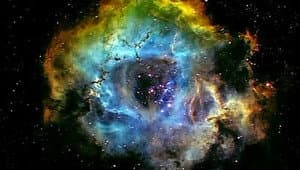
14Nebulas
45 minApr 1, 2008
Nebulae are clouds of gas that aren't classified as stars, planets, moons or asteroids. Astronomers use the most sophisticated techniques to view them since they are practically invisible to the naked eye.
15Wildest Weather in the Cosmos
45 minApr 8, 2008
Imagine a tornado so powerful, it can form a planet or how about rain made of iron.
16Biggest Things in Space
45 minApr 15, 2008
Discover which is the largest planet, star, star cluster, constellation, black hole, volcano, galaxy, explosions, moon, storm, impact crater and void in space.
17Gravity
45 minApr 22, 2008Now viewing
Explore how science and humanity discovered, overcame and utilized gravity.
18Cosmic Apocalypse
45 minApr 29, 2008
The Universe as we know it is condemned to death. Space, matter and even time will one day cease to exist and there's nothing we can do about it. Harsh realities are revealed about the future of our Universe; it may collapse and burn or it might be gripped by a galactic ice age. Either of these scenarios might be a long way off. However, our Universe could suddenly be destroyed by a "random quantum fluctuation", a bubble of destruction that can obliterate the entire cosmos in the blink of an eye. No matter how it ends, life in our Universe is doomed.